|
Natural Chef - 450 hours Classroom course only- (7 months - includes 6-week independent Culinary Externship) Do you have a passion for cooking fresh, delicious, whole foods? Are you interested in learning to prepare meals in a healthy manner without sacrificing taste, texture, or beautiful presentation? Whether you want to become a professional Natural Chef, Personal Chef, or polish your kitchen skills to better nourish yourself and your family, the Bauman College Natural Chef Training Program can help you attain your culinary arts goals. Completion of the program enables you to work as a therapeutic cook, personal chef, natural chef, cooking consultant, or whole foods cooking instructor. The Natural Chef Training Program is committed to the development of nutritional and therapeutic cooks who are artists in food preparation and presentation. Course work emphasizes nutritional and therapeutic cooking and mastery of all necessary kitchen skills including ServSafe® requirements for safety and sanitation, while learning the business aspect of Personal Chef. The Natural Chef Training Program prepares students for a career in the blossoming natural and whole foods industry.
You will:
- Master professional culinary arts including knife skills, kitchen sanitation, and steps to efficient meal preparation
- Convert classic recipes into healthier versions, using alternative ingredients, and developing a repertoire of tasty and reliable recipes
- Create delicious and therapeutic meal plans for individuals with cancer, diabetes, heart disease, allergies, digestive disturbances, and other chronic health challenges
- Test recipes, make quantity conversions, and plan, prepare and serve a multi-coursed, theme-based public Culinary Showcase
- Enjoy working in a community of skilled instructors and fellow students who pour their passion for food and health into each dish
Download the Natural Chef Mini-syllabus
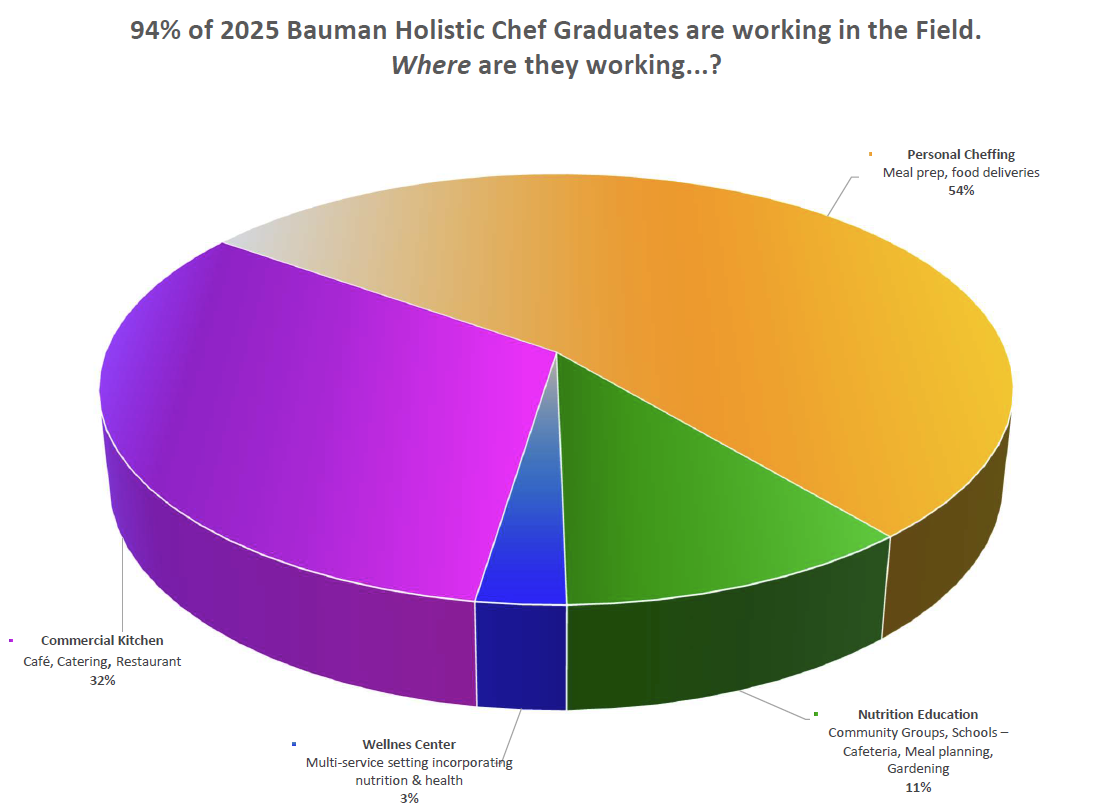
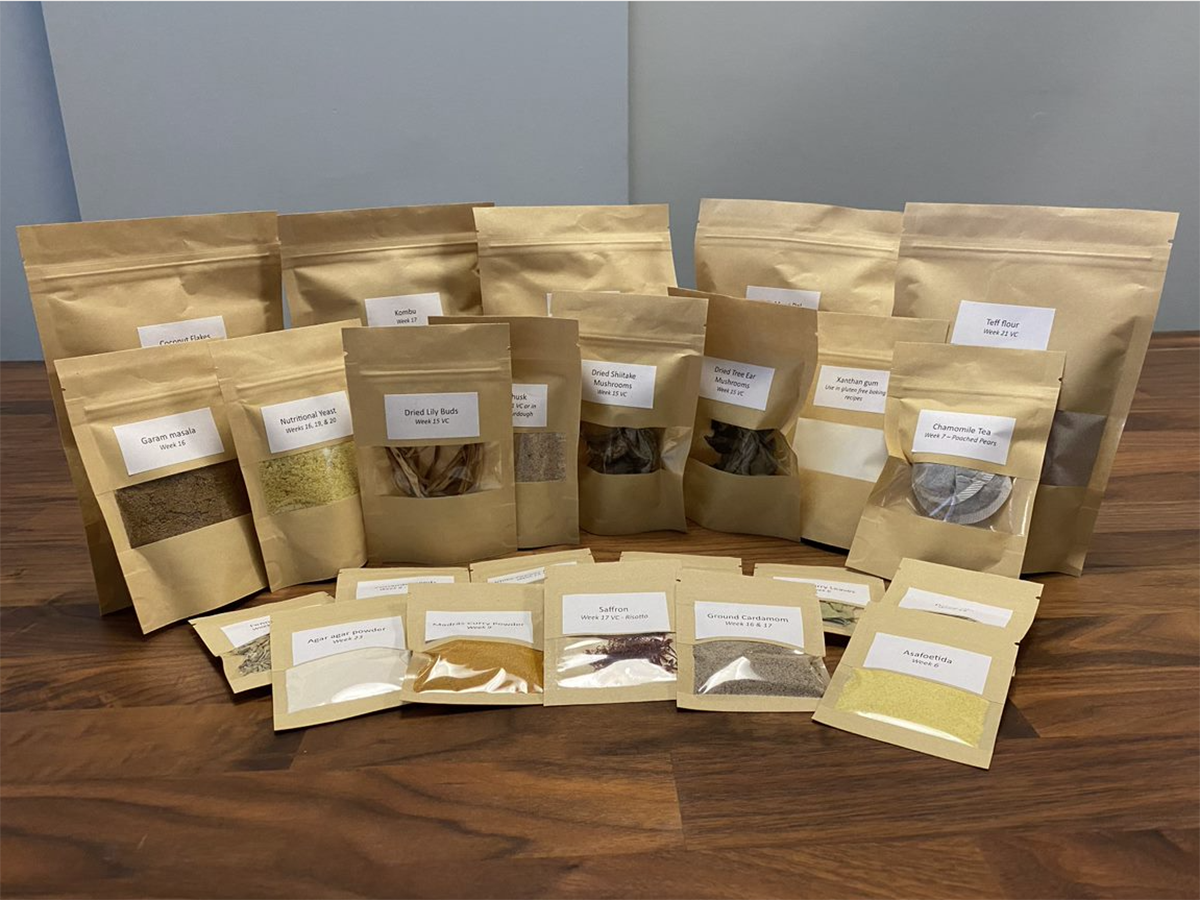
Download the Natural Chef classroom schedules Request a catalog Apply Now! Careers as a Natural Chef Natural Chefs are in great demand as the need for good nutrition and healthy lifestyle choices becomes more apparent in our fast-paced world. Natural Chefs are trained to provide healthy and ill people with top-quality, satisfying, and beautifully presented meals. The Natural Chef Training Program prepares students for a career in the blossoming natural and whole foods industry with the added benefit of leaving as a ServSafe® certified Food Manager, should they choose to sit for the exam offered during the program. Completion of the program enables you to work as a therapeutic cook, personal chef, natural chef, cooking consultant, caterer, or whole foods cooking instructor. Graduates work in private homes as personal therapeutic chefs, as well as for catering companies, health spas, health food stores, retreat programs, and restaurants. Class Offerings: Spring and Fall classes meet three days per week in the daytime or evening, totaling 15 class hours each week week with a few exceptions where classroom instruction could total up to 17 hours in the week. Students should plan to spend half as much time on homework and individual study as they spend in class. Program Fees: Click HERE for a current list of pricing, including monthly payment plans. Visit our Fees and Funding page for information on financial assistance. Required Materials: Students are required to purchase several materials that are not included in the materials fee for the Natural Chef Training Program. These items must be purchased independently. See the Natural Chef Materials List for the list of provided materials as well as required independent purchases. The cost of materials varies considerably depending on where they are purchased. For recommended purveyors, please contact the Bauman College Natural Chef Department. Recommended Books: The Bauman College Online Book Store contains a selection of Natural Chef books. These recommended books have been vetted by Bauman College as reliable sources of information. They are beloved by our staff and faculty for offering credible research from reputable authors. For students who are interested in a deeper exploration of the art of culinary therapeutics, these books make excellent companion guides to the Natural Chef Training Program. Required Computer Skills: Use of a computer is required to participate in the Natural Chef Training Program. Please review our Technical FAQs before applying. CEU Credits CEU credits for RN’s are available. Bauman College is an approved provider by the California Board of Registered Nursing, Provider Number 11401, for 280 contact hours for the Natural Chef Training Program. Dress Code Requirements:
- Chef coat, white (provided)
- Skull cap to restrain hair (provided)
- Waist apron, white (provided)
- Chef pants, black, hounds-tooth, or black/white checked
- Chef shoes, slip-resistant, hard, closed-toe, and closed-heel
- Beards are permitted, but you may be asked to wear a beard snood
- Mustaches must be kept neatly trimmed and not extend below the corners of the lips
- NO long fingernails, fingernail polish or decoration, or fake fingernails
- NO jewelry, including earrings, rings, bracelets, or watches. Certain facial piercings are permitted, but approval is at the discretion of the Culinary Program Director. Students must be prepared to remove their facial piercing should it not comply with the safety and sanitation standards determined by Bauman College.
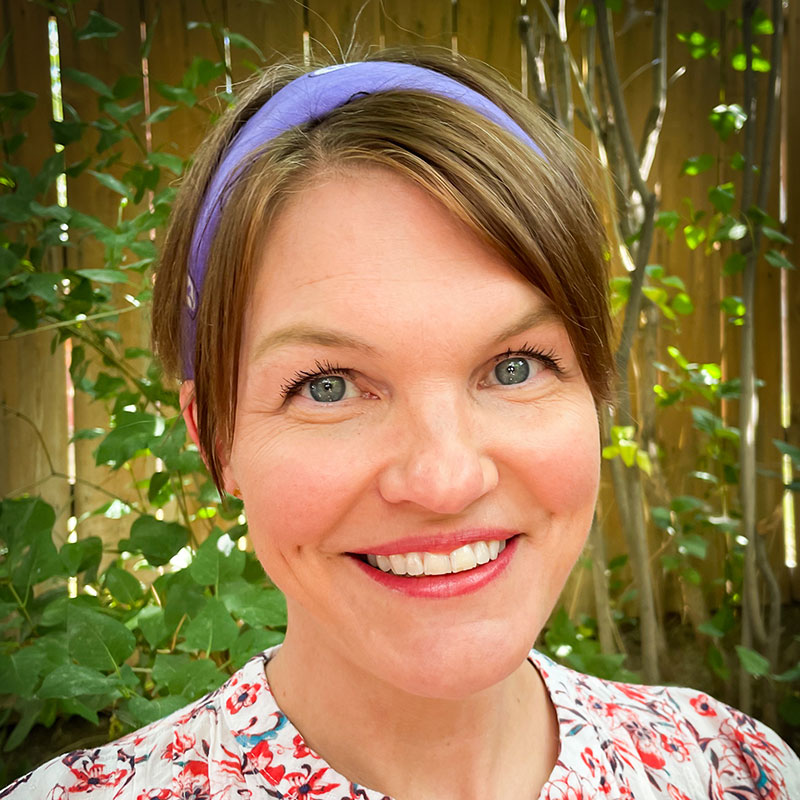
I enrolled in the Natural Chef Training Program at Bauman College in Santa Cruz because, as an educational psychologist, I knew that nutrition has a major impact on conditions such as attention disorders, response speed, and dyslexia. My goal was to develop meal plans that would provide a nutritional balance to benefit my students. In fact, I gained far more than that. It was a marvelous experience that changed how I cook for my family and eat for my own good health.
Joan McHenry, Natural Chef, Santa Cruz, Spring 2004
380 Hours
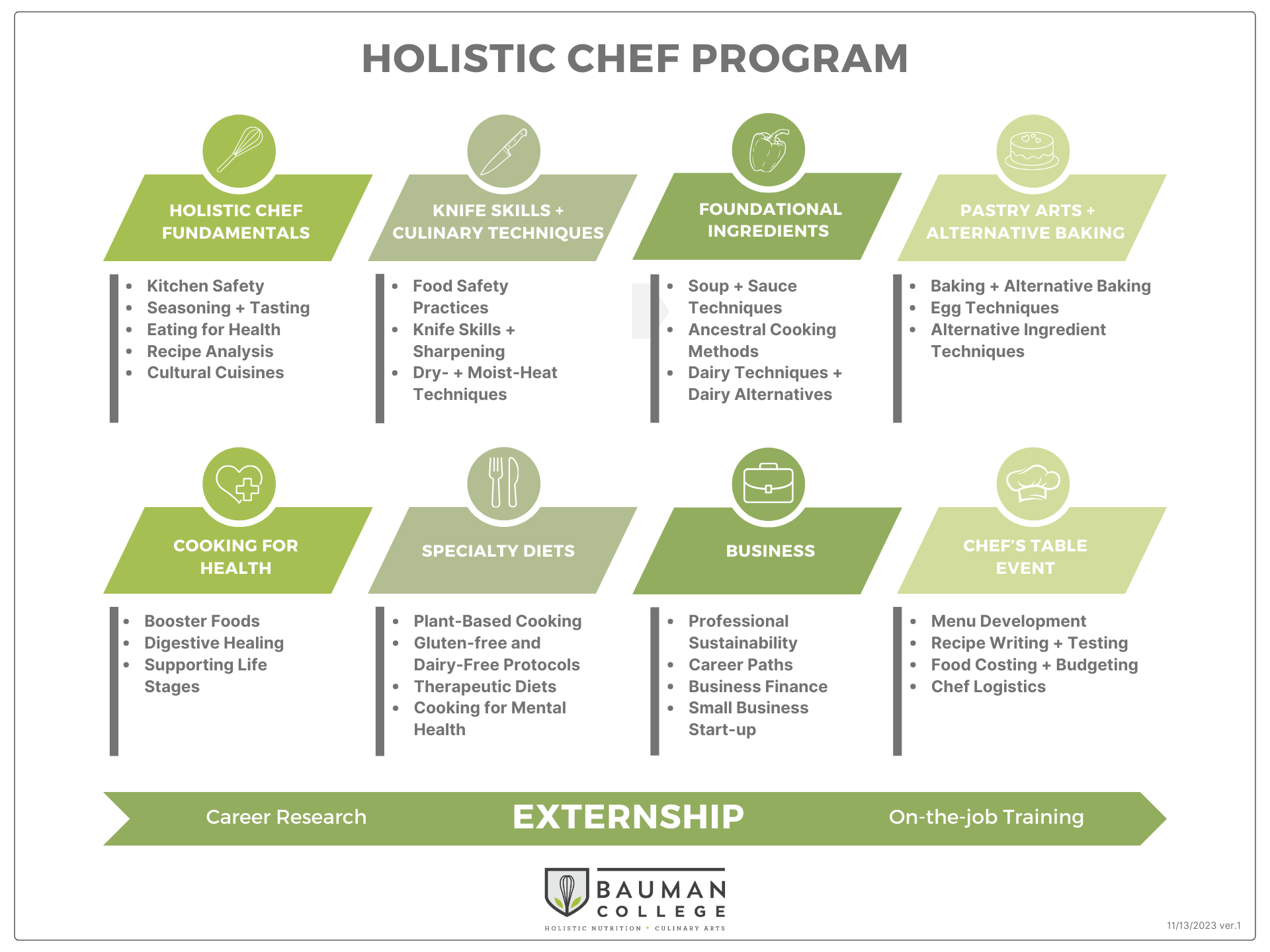
The Natural Chef Training Program is an experiential, hands-on learning process that teaches students the skills required of professionally trained chefs. Uniquely, the Bauman College Natural Chef Training Program also provides a grounded introduction to the art and science of holistic, research-based nutrition. Our curriculum consists of the following:
CF 101: Culinary Nutrition and Kitchen Basics
This module teaches students everything they need to know before stepping into the kitchen and includes ServSafe® safety and sanitation curriculum and the option to sit for the exam and become a certified ServSafe® Food Manager. This module introduces the Eating For Health™ approach to cooking, asystem, founded on principles of local, seasonal, organic, whole-food, plant-based ingredients and the foundation of all work done in the Natural Chef Training Program. Classes in this module are:
- Eating 4 Health™ I and II
- ServSafe® Education
- Recipe Writing
- Culinary Math
- Knife Skills
CF 102 and CF 103: Food Foundations
Food Foundations teaches students how to prepare health-supportive recipes with classic and contemporary cooking techniques. Students will learn to cook with alternative ingredients in place of the overly consumed and commonly allergenic dairy, wheat, meat, and sugar that are staples of mainstream home and restaurant cuisine. Classes are:
- Foundations of Cooking
- Stocks
- Soups and Stews
- Sauces
- Salads, Dressings, and Sprouts
- Appetizers and Garnishes
- Greens and Vegetables
- Grain Technique
- Grains, Legumes, Nuts, and Seeds
- Sea Vegetables
- Alternate Ingredients
- Breakfast and Eggs
- Vegetable Proteins
- Introduction to Animal Protein: Fish Technique
- Introduction to Animal Protein: Poultry
- Introduction to Animal Protein: Lamb
- Health-Supportive Desserts
- Wheat-Free Cakes and Pies I and II
- Natural Savory Baking
CF 104: World Cuisine
Bauman College values global cooking traditions that embrace plant-based, whole-food choices. The use of exotic vegetables and spices, healing properties of particular foods, and unique food aesthetics and plating styles that are the pillar of World Cuisine are closely studied and practiced. In this section, students learn to prepare the following World Cuisines:
- Western Mediterranean
- Eastern Mediterranean and North African
- Thai
- Japanese
- Indian
- Latin American
- North American
CF Mid-Term
Students will spend three days on Midterms, which are designed to evaluate their comprehension of basic culinary skills and techniques. Students will be tested on ingredient identification, knife skills, execution in preparation of grains, soups, salads, and dressings, as well as performance on a written exam.
CF 105: Farm to Table
This section teaches students the art of traditional preparations such as fermenting, dehydrating, and food preserving. Students also learn how to maintain the integrity of temperature-sensitive enzymes in raw foods while continuing to apply culinary technique and produce beautiful, delicious meals. Lastly, this section includes a field trip to a local organic farm, garden, market, or other place of culinary interest. Classes are:
- Field Trip
- Food Preservation
- Fermentation
- Raw Foods
CF 106 and CF 107: Therapeutic Applications
Arguably our most valuable section in the curriculum, Therapeutic Applications teaches students the role food plays in recovery and management of health conditions. This education is cutting-edge in a powerful shift toward health promotion, natural longevity, and disease prevention and recovery. Classes in the module are:
- Therapeutic Herbs and Spices
- Therapeutic Menu Planning
- Digestive Wellness I and II
- Candida
- Allergy and Immunity
- Blood Sugar I and II
- Weight Management
- Heart Health
- Cancer I and II
CF 108: Client Services
Client Services guides students into their own financially successful niche with specific instruction on how to develop streamlined culinary operations in a variety of chef services. Classes are:
- Business Development I and II
- Personal Chef
- Catering
CF 109: Culinary Showcase
The Culinary Showcase demonstrates the students’ mastery of food selection, preparation, and presentation. This very special theme-based meal illustrates the benefits of skillful planning, budgeting, shopping, and aesthetics. Under the supervision of their Instructors, students gain hands-on experience in catering for a special occasion, and family and friends have an opportunity to sample the students’ work in a festive atmosphere. Music and poetry have accented several recent Culinary Showcase meals. In the classes leading up to the Showcase, students work in committees and learn to handle necessary tasks with ease and confidence. These artistically presented, wonderfully imaginative, and delicious meals are very special celebrations for students, staff, and guests. Classes in this section are:
- Showcase Planning
- Showcase Recipe Testing
- Showcase Scaling and Costing
- Showcase Preparation
- Showcase Event
- Showcase Material Assembly
CF 110: Final Presentations
The Final Presentation is one of the most unique and beneficial parts of the Natural Chef Training Program at Bauman College. Students are asked to draw on their personal interests, passions, and experiences to deliver a final presentation that is both technically proficient and expressive of their future work as a Natural Chef. These presentations demonstrate competency of all topics covered in the program and provide students an opportunity to practice and gain confidence in public speaking. The students will choose a specific health condition for their project and conduct research on the condition, provide nutritional information on how food aids in the recovery or therapy of the condition, and create original recipes that demonstrate their understanding of culinary and healing arts. Recent topics have included Gluten-Free Cooking, Whole Foods-Based Vegan Nutrition, and Cooking for Cancer Recovery.
Culinary In-House Skill Hours
20 Hours
In preparation for the Culinary Externship, students are required to complete in-house culinary work to hone skills prior to taking those skills into the field. In-House Culinary Skills Hours will offer a variety of work relevant to the direction a student wishes to take their externship, e.g. preparing for Bauman catering events, assisting in community cooking classes. Culinary In-House Skill Hours are supervised by Bauman College Faculty and Staff and must be completed by the last day of class.
50 Hours
Students are required to complete culinary field work in order to become a certified Natural Chef. This work will instill competency and confidence in the chef. Externship hours must be supervised and may include working as a personal chef or caterer, in a natural food restaurant, holistic food-related community organization, retreat center, or cooking class.
ABOUT BAUMAN COLLEGE
Bauman College is a holistic nutrition educational facility and healthy cooking school offering, in addition to their other nutrition certification programs, a Natural Chef program that provides student chefs with classes in organic cooking, holistic whole foods preparation, and training in attractive food presentation. This complete holistic culinary arts program prepares Natural Chef program graduates to pursue careers as professional vegetarian chefs in the growing natural food restaurant industry, organic personal chefs, and special dietary needs chefs that will provide healthful food to prevent illness and promote optimal health for their special needs clients.
|